.svg)

Agentic OMS for real-time fulfillment
The Agentic
Order Management System
built for enterprises
Connect fulfillment operations with AI-driven decision-making, giving internal agents the intelligence to act, and external agents the operational foundation they need.
Built for networks at scale
AI agents embedded
Live in weeks














Why legacy OMS fails
Modern retail fulfillment is
too complex for static rules
Retailers operate across dozens of channels, locations, and delivery options with inventory distributed network-wide. Every order triggers a cascade of decisions. Without real-time orchestration, fulfillment becomes a source of cost, delay, and lost revenue.

Decisions based on incomplete inventory
Inventory is scattered across stores, warehouses, and partners. Without a unified, real-time view, every fulfillment decision is built on data that's already outdated.

Static rules can't keep pace with reality
Customer expectations and network conditions shift constantly. Rule-based routing logic was never designed to adapt, and it shows every time something goes wrong.

Manual logic breaks at network scale
As fulfillment networks grow — more locations, partners, and channels — the complexity exceeds what any team can manage manually. Intelligence needs to be built in.

products
Connect inventory, orders, and AI agents across your network
fulfillmenttools unifies inventory, orders, and fulfillment into a single intelligent decision layer. Its API-first, MACH-certified architecture enables teams and AI agents to continuously evaluate and optimize.
Global Inventory Hub
Real-time inventory for fulfillment decisions
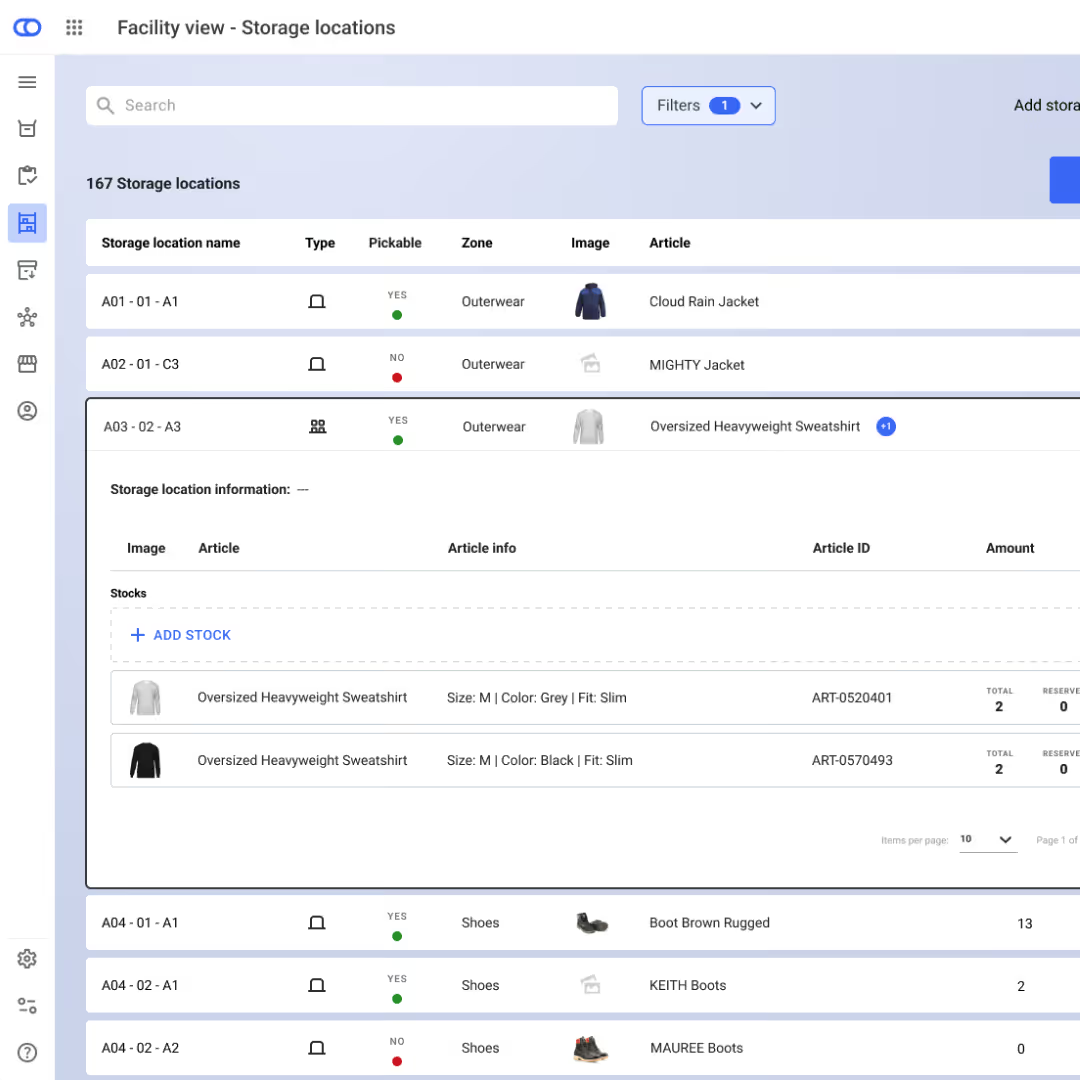
Unify stock, availability, and reservations across stores, warehouses, suppliers, and partners into a single, always-accurate view. Every fulfillment decision, whether made by your team or an AI agent, is only as good as the inventory data behind it.
Availability and Promising
Accurate delivery promises are kept
Availability and Promising continuously evaluates inventory and capacity constraints as they change, not as they were yesterday. From product pages to checkout, it provides accurate data that commerce systems and AI agents require to keep customer promises feasible.

Advanced Order Routing
AI routing engine optimizes each decision
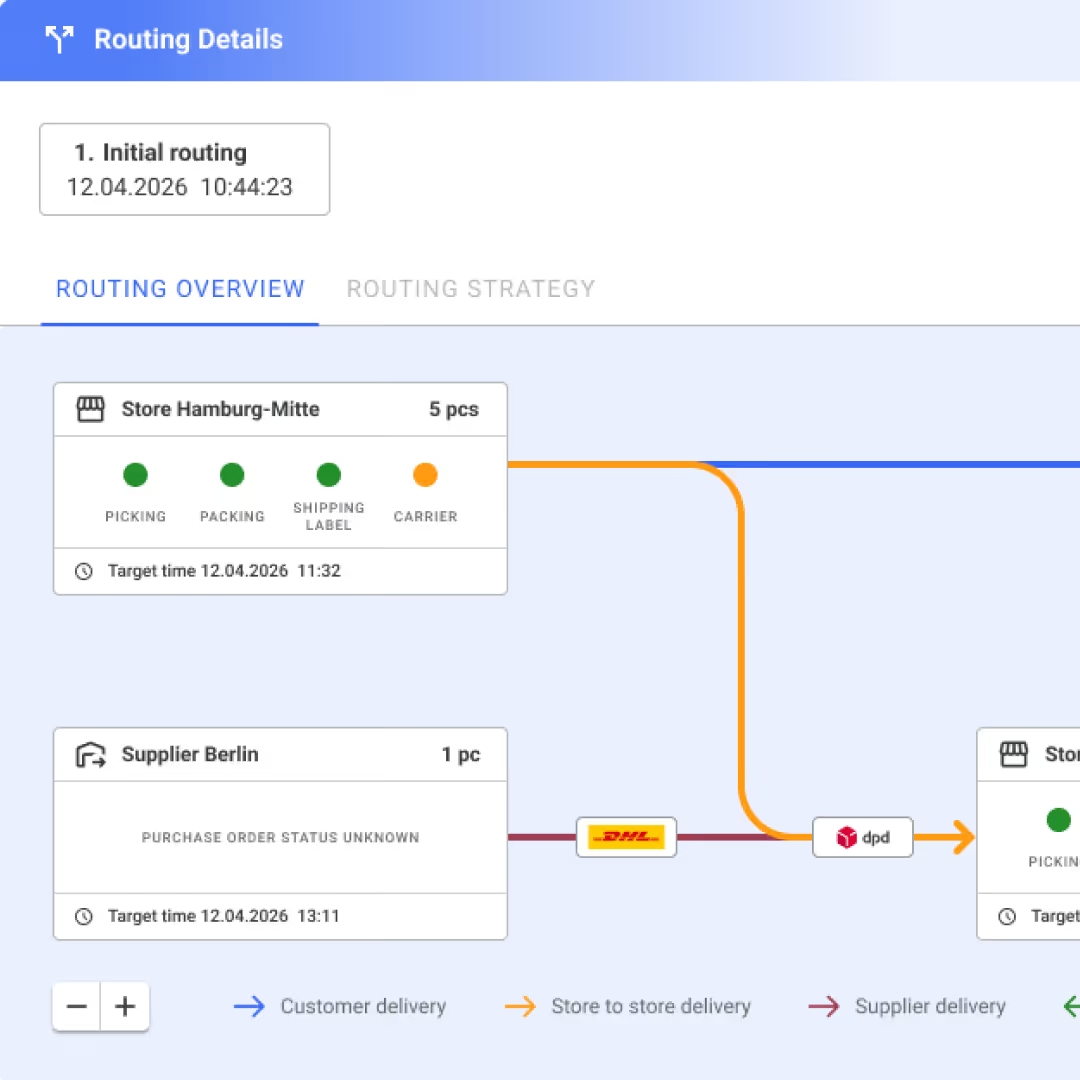
Advanced Order Routing evaluates inventory, capacity, delivery targets, and operational constraints in real time to select the optimal fulfillment path for each order. AI agents dynamically adapt routing decisions, balance cost, and enhance service without manual intervention.
Order Management
Full visibility and control from order to delivery
Orders rarely follow a fixed path. Inventory shifts, capacity changes, and exceptions happen. Order Management monitors every order in real-time, rerouting, resolve exceptions, and keep execution on track. AI agents continuously monitor order lifecycles, so teams stay focused on strategy.

Store Operations
Stores execute as fulfillment nodes in sync
Stores are no longer isolated execution points, but active nodes in the network. Store Operations guides teams through picking, packing, and handover. As AI agents optimize across the network, Store Operations ensures every location executes reliably in sync with upstream decisions.

Analytics
Intelligence loop improves every decision
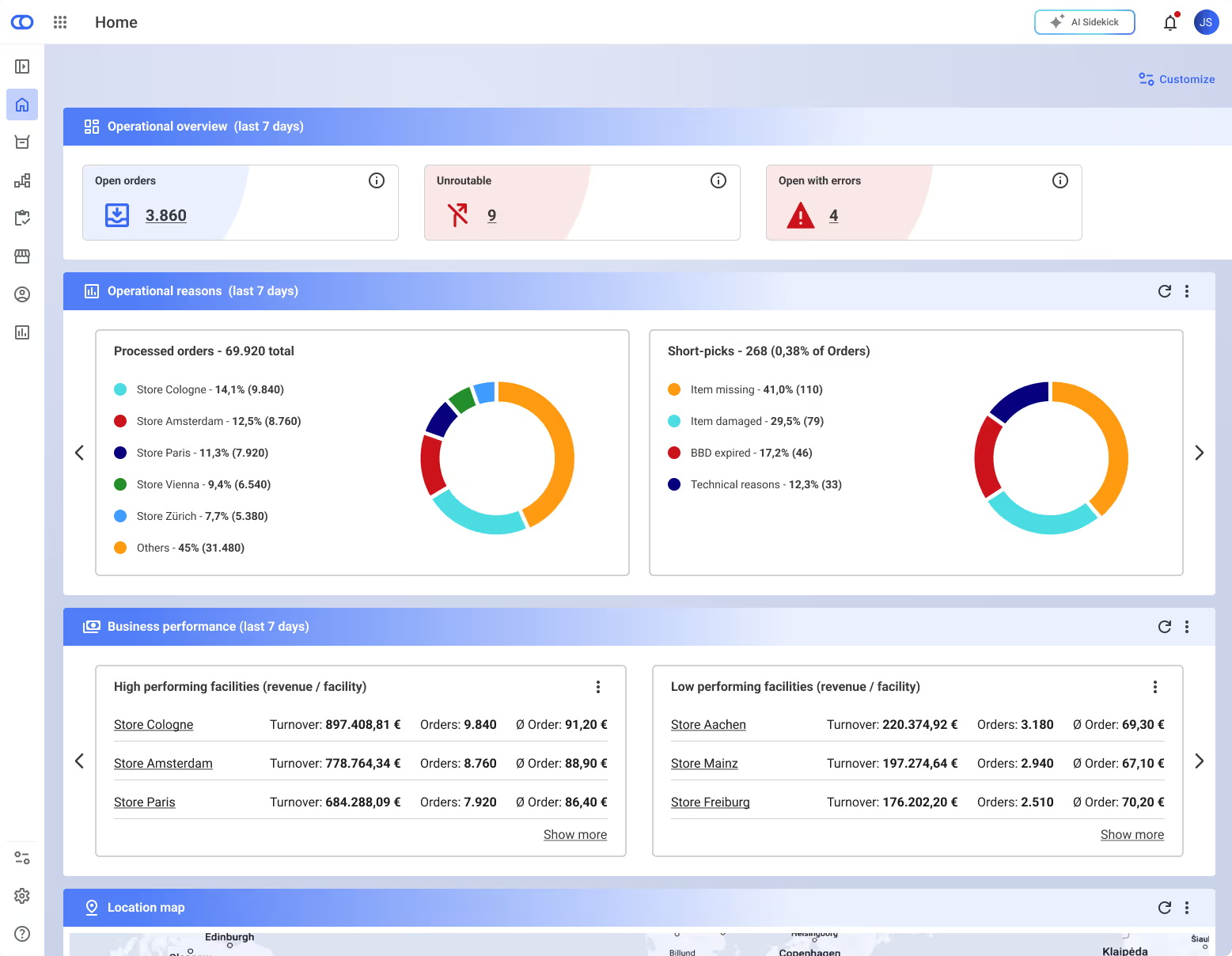
Every order generates data from routing decisions to execution outcomes. Fulfillment Analytics surfaces patterns, bottlenecks, and optimization opportunities in real-time. These insights feed back into fulfillmenttools AI agents, which continuously improve. The longer it runs, the smarter it gets.
Customer impact
How leading retailers improve
with fulfillmenttools
From real-time inventory visibility to intelligent routing decisions, see how retailers reduce costs, improve delivery performance, and scale operations with an Agentic OMS.






.png)


.png)
.png)
.avif)
Industry Requirements
B2C and B2B fulfillment require different decision logic
From delivery speed and customer experience in B2C to contract logic and operational complexity in B2B, fulfillmenttools adapts its routing to the realities of your business model.
B2C brands
B2B merchants

Fulfillment built around customer expectations
B2C fulfillment is driven by speed, availability and convenience. Customers expect accurate delivery promises and flexible options across every channel — every time they order, without exception.

Connect stores, warehouses and digital channels
B2C retailers fulfill orders across stores, warehouses and pickup locations — each with different inventory and constraints. fulfillmenttools routing logic spans the entire network, supporting ship-from-store, click & collect and distributed inventory.

Turn inventory into reliable delivery promises
Inventory alone is not enough in B2C. Fulfillment decisions must combine real-time availability with delivery logic — so every promise shown to the customer is accurate, achievable and never leads to failed fulfillment.

Optimize orders for speed, cost, and delivery promise
B2C fulfillment demands a real-time balance between delivery speed, cost, and service levels for every order, across every channel. AI agents continuously evaluate routing options, ensuring promises are accurate and decisions keep fulfillment efficient.

Built for large, complex order structures
B2B fulfillment involves bulk quantities, complex order compositions and account-specific requirements that vary by customer. fulfillmenttools AI agents evaluate feasibility and contractual logic together ensuring every order is routed correctly, at scale.

Fulfill against customer-specific pricing and contracts
B2B fulfillment logic depends on negotiated pricing, customer-specific terms and product requirements that vary by account. fulfillmenttools AI agents build these contractual constraints into routing and orchestration — fulfilling every order as agreed.

Handle bulk, heavy, scheduled deliveries — no exceptions
B2B logistics includes palletized goods, heavy shipments and scheduled delivery windows each with specific transport constraints and lead times. fulfillmenttools AI agents factor these realities into every routing decision.

Deliver with predictability and contractual control
B2B customers depend on reliability. Fixed delivery schedules, service commitments, and account-specific rules aren’t optional, they're contractual. fulfillmenttools AI agents continuously monitor and adjust fulfillment execution to ensure commitments are met.
Agentic Order Management matters
The ERP keeps its place.
Order orchestration moves on.
ERP and custom builds weren't built to orchestrate inventory, orders and fulfillment across distributed retail networks. That's what an Agentic Order Management System does.
Static logic that cannot adapt
Fixed rules and manual processes can't respond when conditions change.
No unified inventory view
Inventory sits across locations, so decisions rely on outdated data.
Not built for distributed networks
Traditional ERP modules weren't built for fulfillment across stores and partners.
New channels take months to launch
New channels take months to implement, competitors move faster.
Execution without intelligence
Without continuous decision-making, exceptions turn into delays.
Continuous, intelligent decision-making
fulfillmenttools connects data and execution for real-time fulfillment decisions.
Optimize routing in real time
The Order Routing Agent continuously finds the best path based on live conditions.
Built to scale distributed retail networks
Orchestrate stores, warehouses, suppliers and partners in one connected system.
Adapt in days, not months
Adjust routing logic and strategies without development lengthy cycles.
Improve with every order
Every order feeds insights back into agents acting within defined limits.
Business impact
What retailers unlock with
Agentic Order Management
Moving from static orchestration to intelligent decision-making reduces costs, improves delivery outcomes, and gives every team and AI agent the foundation to perform.

Enable real-time decisions
AI agents select the best fulfillment location for each order using real-time data and no manual logic is required.

Improve delivery reliability
Accurate delivery promises, fewer delays, and consistent execution across every fulfillment location and channel.

Reduce fulfillment costs at scale
Smarter routing decisions eliminate unnecessary shipments and inefficient fulfillment paths, reducing costs at scale.

Scale operations without complexity
Support ship-from-store, click-and-collect, and distributed delivery networks without complex custom logic.

Maximize operational transparency
Real-time visibility into order flows, inventories, fulfillment performance, and network bottlenecks for teams and agents.

Frequently asked questions
From architecture to intelligent decision-making, get answers to the most important questions about fulfillment orchestration and Agentic OMS.
All topics
Product and platform
Setup and integration
What’s an Agentic Order Management System?
An Agentic OMS connects inventory, orders, and fulfillment operations across your entire network and continuously improves decision-making.
Instead of relying on static rules, it uses real-time data and adaptive logic to automatically optimize routing, availability, and order execution.
How is fulfillmenttools different from a traditional OMS?
Traditional OMS platforms focus on order processing and rule-based orchestration.
fulfillmenttools goes further by combining real-time visibility, intelligent decision-making, and continuous optimization into a single Order Management System.
It enables retailers to move from reactive operations to proactive, data-driven fulfillment.
How does fulfillmenttools integrate with existing systems?
fulfillmenttools is API-first and integrates seamlessly with commerce platforms, ERP systems, WMS, POS, and external partners.
It acts as the central orchestration layer across your fulfillment ecosystem, without requiring replacement of existing systems.
Why do I need an OMS if I already have an ERP?
ERP systems aren’t built for real-time, multi-location fulfillment decisions.
fulfillmenttools adds a dedicated orchestration layer that enables accurate inventory visibility, intelligent routing, and adaptive fulfillment logic across distributed networks.
How quickly can we get started?
fulfillmenttools is built for fast implementation. Enterprise retailers are typically up and running in 9 weeks depending on their setup. Our team works with you from day one to configure fulfillmenttools, connect your systems, and activate the right level of AI for your current operational maturity.