What is an Order Management System (OMS)?

There are likely a thousand definitions for Order Management and Order Management Systems, each similar yet distinct, reflecting the unique biases and positions of different vendors—including ours. Nevertheless, we’re diving into Version 1001.
Definition of Order Management System
An Order Management System is a software which focuses on the entire order processing, including tasks such as pricing, promotions and payment processing. It aims at making internal processes efficient by automating key processes such as transactions, payment and communication
Understanding Order Management: Endless Definitions, Each Uniquely the Same
In today’s fast-paced retail environment, managing customer orders efficiently is crucial to ensuring customer satisfaction and optimizing business operations. This is where an Order Management System (OMS) becomes an integral piece of technology.
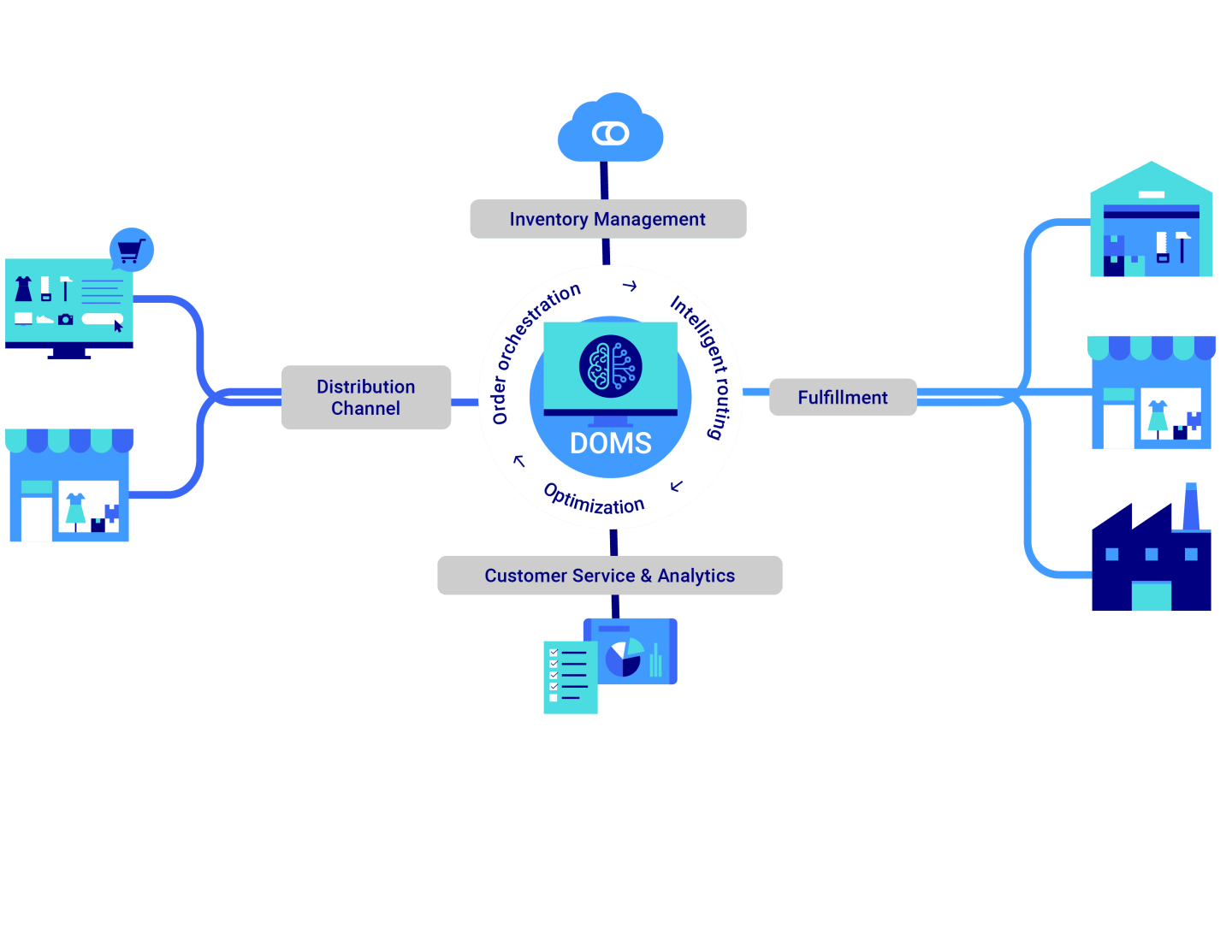
An OMS is a solution designed to streamline and centralize the management and handling of customer orders. It oversees everything from order promising (incl. product availability and ETA), omnichannel order placement to fulfillment and returns management. Its primary goal is to ensure a seamless and responsive order and delivery process that meets customer expectations and business requirements alike.
One size does not fit all
In the diverse landscape of Order Management Systems, some vendors provide an expansive suite of capabilities that cover every aspect of the order lifecycle, while others focus their expertise on mastering specific areas to deliver precision and excellence in targeted aspects of order management. Both approaches are perfectly valid and coexist to cater to the varying needs, sizes, complexities, and budgets of different retailers and brands.
How do I find the right OMS ? A step-by-step guide
Questions you should ask yourself:
Step 1:
What are my major problems when it comes to inventory availability, order processing and commerce operations in general ?
Step 2:
Do I actually need Order Management capabilities or a System as a standalone solution ? Ideally get support from a trusted advisor.
Step 3:
Does my set-up require specialized capabilities in a specific area of Order Management? Do I already have standalone systems that cover areas such as pricing, promotions, payment etc. that discourage me from entertaining a full suite OMS? For example, many fulfillmenttools chose us since they have a complex set-up of sales and inventory channels across borders which demands highly sophisticated order routing and decision engines.
Step 4:
How much flexibility do I need to customize and configure my OMS according to my needs? For example, most customers of fulfillmenttools have quite unique processes and order sourcing logic. Therefore, they appreciate the high level of flexibility.
Step 5:
How much budget do I have for licenses and the project itself?
Step 6:
What is my technological philosophy and which vendor fits in the best in my architecture?
What are the key functions of an OMS ?
Now that we understand the varying scopes of capabilities offered by OMS vendors, and recognize that there is no single definition of essential features, we've compiled a summary of the most crucial ones that often overlap significantly across different vendors.
- Stock Unification
- Aggregation: An OMS aggregates inventory data from various channels such as warehouses, stores, suppliers, and future stocks. This comprehensive integration ensures that all sales channels have real-time access to inventory information.
- Inventory Visibility: By unifying stock data, retailers can significantly reduce stock shortages and offer a clearer view of available products across channels. This capability enhances customer satisfaction by preventing order cancellations and delays.
- Order Orchestration
- Routing Engine: OMS uses intelligent algorithms to route orders to the most suitable fulfillment location based on factors such as proximity, cost, and customer preference. By doing so, it balances business efficiency with customer satisfaction.
- Flexible Fulfillment: Whether fulfilling from a central warehouse or a local store, an OMS adapts to various business models like Ship-from-Store or Click & Collect, providing versatile fulfillment options.
- Order Management
- Order handling: An effective OMS supports admin staff by editing orders across channels seamlessly. This means changing delivery preferences, adjusting customer details, cancelling orders and more.
- Order status hub: In a more diverse channel landscape, an OMS provides a status hub in which all real-time updates along the order lifecycle are stored and pushed to other 3rd party systems for crucial business processes such as sending the tracking link via mail.
- Returns Management
-
- Streamlined Processes: It simplifies returns management by automating the process, enabling faster refunds, and efficiently reintegrating returned items into inventory. This not only improves operational efficiency but also enhances customer service
What are the extended functions of an OMS?
Legacy Suites or more SME focused OMS players usually offer extended functions on top of the core OMS, making their offering broader and less specialized. These extended functionalities include:
- Pricing & Promotion Management
- Customer Service Capabilities
- Taxation & Invoicing
- Payment
What are the benefits of an Order Management System?
Implementing an OMS brings measurable benefits including:
- Increased Sales and Profitability: By offering a unified inventory availability (incl. promising incoming stock) and estimated delivery dates, retailers can boost conversion rates.
- No More Out-of-Stocks: Through features like Order in Store and Future Stock visibility, products remain accessible across the network.
- Enhanced Customer Satisfaction: With accurate status updates, prompt fulfillment, and effective return processes, customer loyalty grows.
- Streamlined Operations: Automation and smart routing reduce operational costs and lead to faster ROI.
- Improved Shopping Experience: Services like Click & Collect and Return-to-store enhance the buying process by providing flexible options.
- Optimized Logistics Operations: Leveraging stores as warehouses and optimizing logistics flows improve overall efficiency.
What is the difference between OMS and Distributed OMS ?
As the name states, both systems have a big overlap. The Distributed Order Management has an increased focus and capability on crafting sophisticated orchestration rule sets across an omnichannel and multi country context.
Especially legacy OMS systems have a rather broad scope and sometimes even include capabilities such as Pricing, Promotion etc. – Capabilities, that nowadays, in modern architectures, are often handled by specialized standalone solutions.
Conclusion:
Strategic Importance of an Order Management System:
Order Management Systems are not just a tool but a strategic asset that transforms how retailers manage orders and engage with customers. Whether optimizing logistics or creating seamless omnichannel experiences, an OMS positions a retailer for success in a competitive market.
Tailoring OMS to your Business Needs:
Please bear in mind that there is no single definition of an Order Management or Order Management Systems. Retailers should dive into their processes, needs and technological ideas.
Contact us for expert Guidance: For more insights on how an OMS can benefit your business, feel free to reach out to one of our experts. We are here to help you navigate the complexities of order management with ease. We are also happy to recommend a partner to you that will assess your specific use cases together with you.